

Facial tissues, as a common daily consumable, are widely used in homes, offices, restaurants, public restrooms, and many other settings. They are popular with consumers for their convenience, hygiene, and practicality. Facial tissues are typically made from virgin wood pulp or recycled pulp, processed with special techniques to achieve softness, high absorbency, and tear resistance.
Technically, the production process of facial tissues involves multiple stages, including pulp preparation, forming, pressing, drying, cutting, and packaging. The quality of the pulp directly affects the softness and absorbency of the tissues. To improve the quality of facial tissues, many manufacturers employ advanced pulping technologies, such as chemical pulping, mechanical pulping, or chemimechanical pulping, to obtain purer and stronger pulp.
In terms of application scenarios, facial tissues are favored for their portability and hygiene. In homes, tissues are commonly used to wipe hands and faces or clean desktops; in offices, they are essential office supplies for employees, used to wipe keyboards, mice, or handle minor stains; in restaurants and public restrooms, tissues serve as basic hygiene products, providing convenient cleaning services for customers.
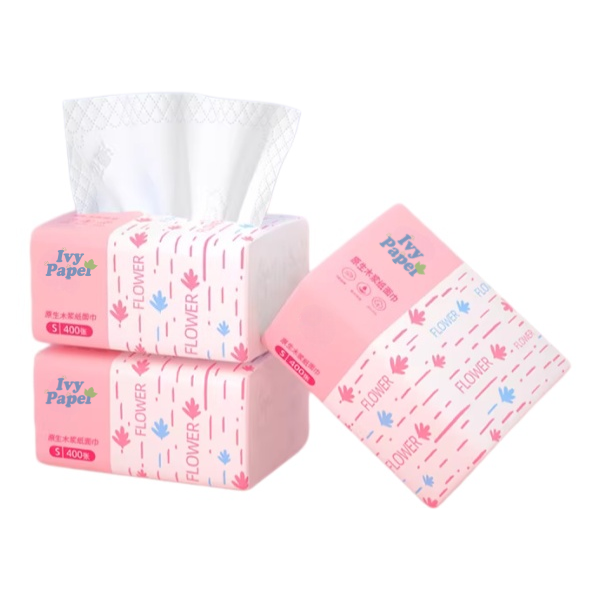
Furthermore, industry standards for tissues are constantly being improved. To ensure the quality and safety of tissues, various countries have established corresponding standards and regulations, strictly regulating the raw materials, production processes, and hygiene indicators of tissues. The implementation of these standards not only improves the overall quality of tissues but also protects consumers' health rights.
When choosing tissues, consumers typically focus on their absorbency, softness, thickness, and packaging. Highly absorbent tissues can absorb moisture more quickly, keeping hands or desktops dry; soft tissues reduce skin irritation and improve comfort; moderately thick tissues meet cleaning needs without causing waste; and attractive packaging enhances the overall quality of the tissues and satisfies consumers' aesthetic preferences.
With increasing environmental awareness, more and more consumers are paying attention to the environmental performance of facial tissues. Some manufacturers have begun using biodegradable materials or recycled pulp in their production to reduce environmental pollution. Meanwhile, some facial tissues have also passed relevant environmental certifications, such as PEFC certifications, providing consumers with more environmentally friendly options.